
2026-08-25 · Mark Oliver
Drying Out Homes After Flash Flooding in Avondale
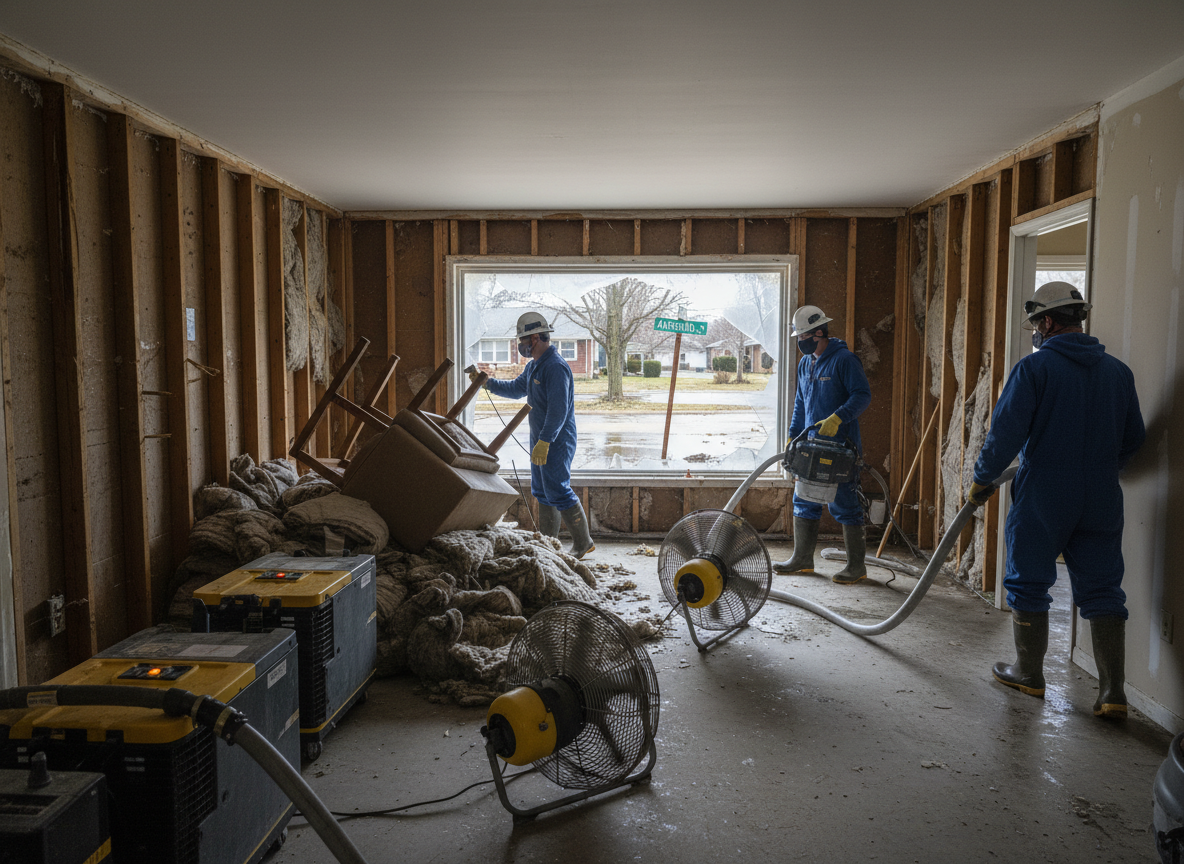
Drying out homes after flash flooding in Avondale starts with rapid water removal followed by controlled airflow and dehumidification that accounts for summer temperatures often above 110 degrees, which can accelerate surface drying but trap moisture deeper in walls and under slabs if not managed properly.
Initial Water Removal in Flooded Homes
Flash floods in Avondale often surge from monsoon rains that overwhelm drainage near Phoenix Raceway and Avondale Civic Center Park, sending water into single-family homes built on flat lots in areas such as Coldwater Springs and Rancho Santa Fe. Standing water must be extracted within the first 24 to 48 hours to limit absorption into drywall, carpet padding, and subfloors. Technicians use truck-mounted pumps and portable extractors to pull water from low-lying rooms, paying special attention to garages and utility spaces where sediment from desert soil settles. In nearby Goodyear and Tolleson, similar events show that homes with slab foundations retain hidden moisture longest, making complete extraction essential before any drying equipment is placed.
Monitoring Moisture Levels During Drying
Once bulk water is gone, professionals track moisture with meters that read drywall, baseboards, and concrete in multiple rooms. Avondale's hot desert climate speeds evaporation on surfaces yet leaves hidden pockets under flooring in older Coldwater Springs properties. Daily readings guide adjustments to air movers and dehumidifiers so relative humidity stays below 50 percent inside the structure. Without this step, residual moisture from floods near Estrella Mountain Community College can migrate into adjacent walls shared with neighbors in Avondale Crossing. Consistent logging prevents callbacks weeks later when homeowners notice musty odors in closets or under sinks.
Using Structural Drying Equipment Effectively
High-velocity air movers and commercial dehumidifiers are positioned to create a directed drying path through affected rooms rather than random placement. In Maricopa County summers, units rated for high heat loads pull moisture faster than standard residential models, often completing the process in 4 to 7 days when started promptly. Homes in Rancho Santa Fe with vaulted ceilings require ceiling-directed airflow to reach top plates, while slab homes in Coldwater Springs need floor-level units to pull vapor from beneath tile. Over-drying can crack wood trim, so technicians balance temperature and humidity hourly based on readings from multiple locations.
Avoiding Mold After Flash Flood Events
Secondary mold growth becomes a risk within 48 hours if humidity remains elevated inside saturated materials. Preventing Mold After Summer Rains in Avondale outlines how local monsoon patterns leave lingering dampness in insulation and behind baseboards. Removing affected porous materials such as carpet and drywall sections before drying begins reduces spore spread. In Phoenix and Tolleson homes that experienced similar flooding, untreated cavities later required full remediation when moisture wicked upward through stucco weep holes.
When Professional Flood Damage Cleanup Is Required
Homeowners in Avondale should contact specialists for Flood Damage Cleanup when water reaches more than 12 inches or enters electrical outlets and HVAC systems. Water Extraction & Removal teams bring equipment sized for larger volumes that rental units cannot match. Structural Drying & Dehumidification follows immediately after extraction to restore homes in Rancho Santa Fe and surrounding neighborhoods. Delaying this sequence often leads to hidden damage that surfaces during the next monsoon season.