2026-08-25 · Mark Oliver
Preventing Mold After Summer Rains in Avondale
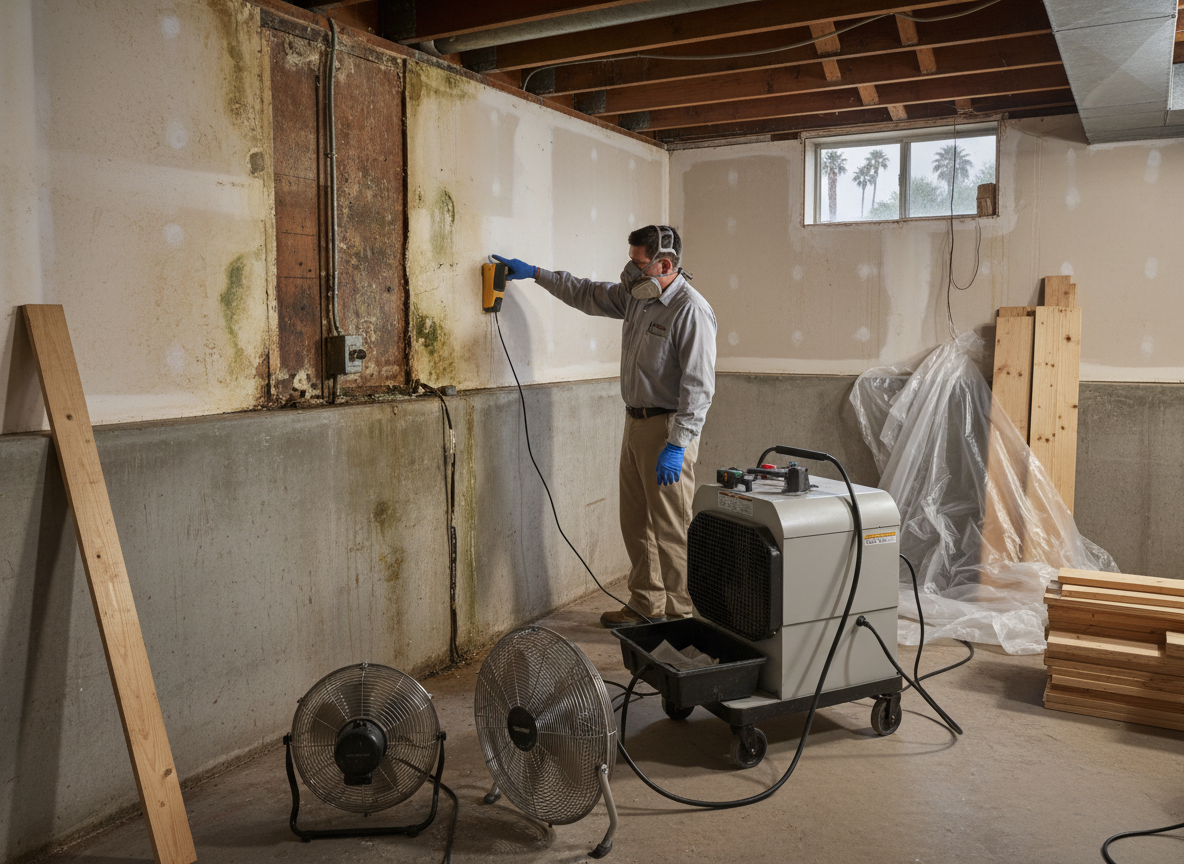
Mold begins growing in Avondale homes within 24-48 hours after summer rains saturate drywall, carpets, and insulation if moisture is not removed through prompt water extraction and removal. In neighborhoods such as Rancho Santa Fe and Coldwater Springs, where many homes sit on concrete slabs built in the last 20 years, monsoon downpours pool against foundations and seep into walls before residents notice. The area's hot desert climate accelerates evaporation on surfaces while trapping humidity inside, turning small leaks into widespread issues that affect nearby cities like Goodyear and Tolleson as well.
How Avondale's Monsoon Patterns Create Hidden Moisture Risks
Avondale receives most of its annual rainfall during July and August monsoons, often dumping 1-2 inches in a single afternoon near the Phoenix Raceway and Avondale Civic Center Park. These storms hit hard in flatter sections of Coldwater Springs and Avondale Crossing, where drainage flows slowly across compacted desert soil and into crawl spaces or slab edges. Older homes near Estrella Mountain Community College retain more water under tile because original vapor barriers have degraded, while newer subdivisions in Rancho Santa Fe use better grading yet still face overflow from shared irrigation ditches. Without immediate flood damage cleanup, residual dampness in baseboards and underlayment feeds mold colonies that release spores into HVAC systems serving entire blocks.
Practical Steps to Remove Water and Block Mold Growth
Begin by shutting off power to affected zones and extracting standing water with pumps rated for at least 50 gallons per minute, focusing first on carpets and padding in living areas. Next, cut away saturated drywall 12-18 inches above the water line in bathrooms and utility rooms common to Avondale's ranch-style layouts. Run commercial air movers and dehumidifiers set to 45-50% relative humidity for 3-5 days, checking moisture meters on studs and subfloors daily. Homeowners in areas like Coldwater Springs should also inspect attic insulation after roof runoff, since the intense summer heat bakes trapped moisture into mold-friendly conditions. For larger events, professional water extraction and removal crews target slab leaks that standard shop vacs miss.
When to Call for Structural Drying and Mold Remediation
If moisture readings stay above 15% after 72 hours of drying, or black spots appear on walls within a week, contact specialists for structural drying and dehumidification services. In Rancho Santa Fe homes with open floor plans, hidden mold often travels through shared wall cavities to bedrooms, requiring containment barriers and HEPA filtration. Local drainage issues that lead to Avondale flooding make repeat problems common along major roads, so residents track patterns after each storm. Drying out homes after flash flooding in Avondale requires targeted equipment that homeowner-grade fans cannot match, especially when temperatures exceed 105 degrees and speed up spore reproduction.
Ongoing Checks for Homes in Maricopa County Neighborhoods
Inspect window wells and exterior grading every spring before monsoon season, clearing debris that blocks flow away from foundations in Garden Lakes and similar subdivisions. Keep gutters clear on homes near Avondale Crossing to prevent overflow into stucco walls, which hold moisture longer than wood siding. After any rain event exceeding half an inch, run a dehumidifier in the garage for 48 hours and monitor indoor humidity below 55%. These habits reduce the need for mold damage remediation after water damage while protecting property values across Goodyear and Tolleson borders. Avondale Restoration Experts operates from 1450 N Dysart Rd, Avondale, AZ 85323 with hours Mon–Fri 8am–6pm and Sat 9am–2pm to support these preventive efforts.